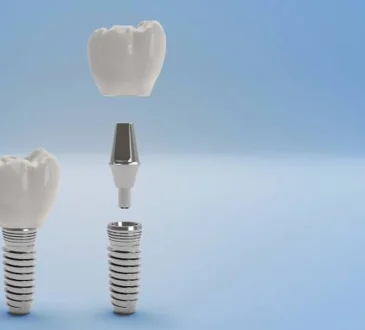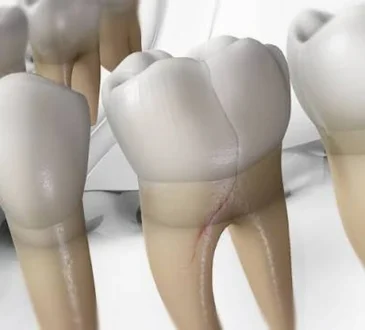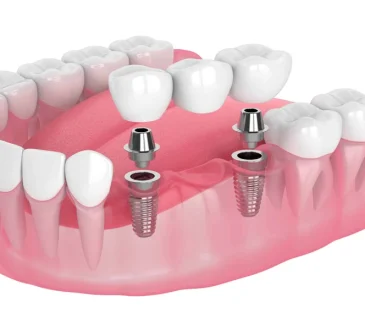

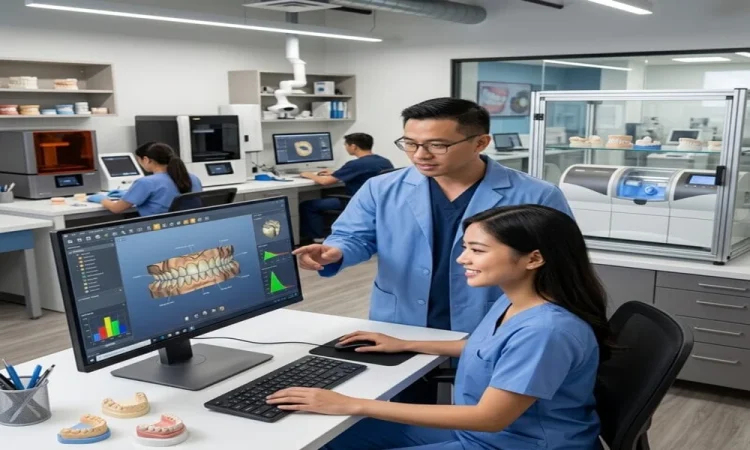
If your dentist has mentioned that your new crown or bridge was “designed digitally,” you might be picturing something more complicated than it actually is for you as a patient. The short version: instead of biting into a tray of putty, a scanner captures your teeth digitally, and a specialist uses that file to design your restoration on screen before it’s manufactured.
The scanning part is the most noticeable change. Traditional impressions were uncomfortable, occasionally triggered a gag reflex, and could distort slightly as the material set, which sometimes meant a restoration that didn’t quite fit and had to be adjusted or remade. A digital scan avoids most of that. It’s faster, generally more comfortable, and gives the design team an exact, undistorted model of your mouth to work from.
What happens next is where most patients lose track of the process, and understandably so, it happens away from the chair. The scan is sent to a design specialist who builds the crown, bridge, or other restoration digitally, checking that it meets your neighboring teeth correctly, that your bite closes properly, and that the margins, the edges where the restoration meets your natural tooth, are clean and precise. Get this step right and the restoration should need little to no adjustment when it’s finally fitted.
Many clinics don’t do this design work in-house. Instead, they send the scan out to a specialized dental cad design service that focuses purely on this step, often reviewing and refining a case multiple times before it’s approved for manufacturing. This division of labor is part of why same-week or even next-day restorations have become realistic in many practices, rather than the two-to-three-week wait that used to be standard.
As a patient, you don’t need to understand the software to benefit from it. What matters practically is this: ask your dentist whether your restoration is designed digitally, and if it is, you can generally expect fewer follow-up visits for adjustments and a more predictable, comfortable experience overall.
It’s a small question that can meaningfully shape your experience, and most dentists are happy to explain exactly how a particular restoration was produced if you simply ask.