Which Ayurvedic Supplements Support Strength, Stamina and Muscle Recovery for Gym-Goers?

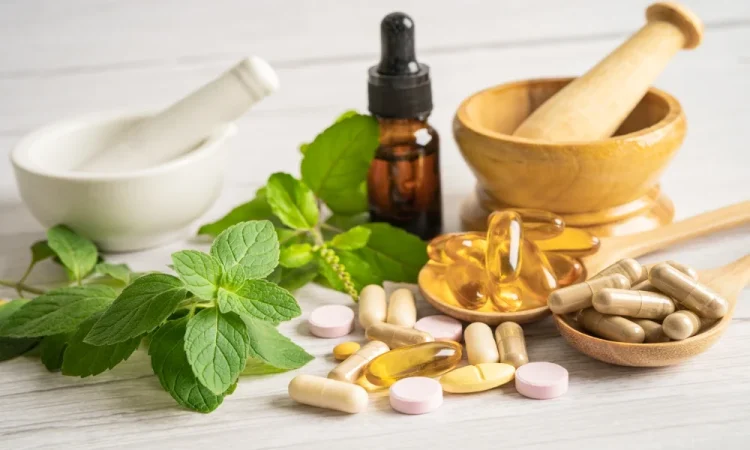
For years, Ayurveda has been associated with everyday wellness. Now, a new question is emerging in fitness circles: can some of its traditional ingredients meaningfully support how we train, recover and perform?
The answer is starting to become more interesting. Ingredients such as Ashwagandha and Shilajit are no longer being discussed only through tradition; they are also being studied in the context of strength, stamina and exercise performance.
That makes Ayurvedic supplementation for gym-goers less about following a trend and more about matching the right ingredient to the right training goal.
1. Ashwagandha: one of the stronger options for resistance training
Ashwagandha has probably made the clearest transition from traditional wellness to modern sports nutrition. In an eight-week randomized, placebo-controlled trial, young men taking Ashwagandha while resistance training recorded greater improvements in bench-press strength than those taking a placebo. Researchers also looked at exercise-related muscle damage as part of the recovery assessment.
Another 12-week strength-training study found greater improvements in squat and bench-press strength among participants taking a standardized Ashwagandha extract.
The research base is still developing, but Ashwagandha is one of the more relevant Ayurvedic ingredients for someone whose routine centres on regular strength training.
2. Shilajit: increasingly being studied through a gym-performance lens
Shilajit has traditionally been associated with vitality, but modern research has started examining more specific outcomes.
A randomized, double-blind clinical study on purified Shilajit found increases in total and free testosterone after 90 days in healthy men aged 45-55 compared with placebo. That does not mean every Shilajit product will produce the same result, since purification, dosage and formulation can differ substantially.
It is also why the type of Shilajit product matters. Kapiva’s Shilajit Gold Resin, for example, is designed as a gym-focused formulation rather than a plain single-ingredient resin. It combines Himalayan Shilajit with Nagori Ashwagandha, Black Musli, Swarna Bhasma and Gokshura, and is positioned around workout performance. Kapiva’s product information
The formulation has also been evaluated in an eight-week randomized, placebo-controlled study registered as CTRI/2024/07/071339. Kapiva’s clinical summary reports around 30% heavier lifting, a 40% increase in total testosterone and 26% longer treadmill time versus baseline. The brand has separately published a 2026 review examining Shilajit Gold in the context of athletic performance.
For gym-goers, that makes the distinction useful: regular Shilajit and a performance-focused Shilajit formulation should not automatically be evaluated in the same way.
3. Safed Musli: interesting early evidence around physical performance
Safed Musli has long appeared in Ayurvedic formulations associated with physical vitality, but its sports-performance evidence is much smaller than Ashwagandha’s.
A randomized, placebo-controlled pilot study followed 60 healthy volunteers taking Chlorophytum borivilianum, or Safed Musli, for two months. The group taking Safed Musli performed better on some walking and exercise-capacity measures than the placebo group.
The findings are promising rather than conclusive. For now, Safed Musli is better seen as an ingredient with emerging human evidence rather than an established sports supplement.
4. Gokshura: widely used, but the evidence needs more caution
Gokshura, commonly linked with Tribulus terrestris, appears frequently in men’s fitness formulations.
Its reputation as a testosterone or performance ingredient is stronger than the clinical evidence behind it.
A systematic review of Tribulus in physically active men found no clear evidence that supplementation meaningfully improved hormonal behaviour or muscle-damage markers. An earlier systematic review focused on testosterone and performance claims also found the evidence for increasing testosterone in humans to be limited.
That does not make Gokshura irrelevant within Ayurveda. It simply means gym-goers should be careful about judging it by aggressive standalone testosterone claims.
What should gym-goers actually choose?
There is no single Ayurvedic supplement that covers every fitness goal.
Ashwagandha currently has a relatively useful body of human research around resistance training. Shilajit becomes more relevant when strength and testosterone support are part of the objective, particularly when the formulation itself has been studied. Safed Musli has encouraging early research, while the sports-performance evidence for Gokshura remains less convincing.
The bigger point is that an Ayurvedic supplement should sit around a good training routine, not try to compensate for a poor one.
Progress in the gym will still depend primarily on training quality, recovery and nutrition. The role of supplementation is to support that foundation.