
Sometimes the worst part of having a wound isn’t the wound. It’s the skin around it.
You take off a bandage and find a red outline where the adhesive sat. The next dressing pulls at the same spot, and a few days later that skin is sore, even though the cut itself is healing.
It happens most when a wound needs regular dressing changes, and especially if your skin is sensitive or fragile. Once you understand what may be causing it, it becomes easier to reduce the irritation.
What’s irritating the skin
Adhesive is one of the most common causes. Every time a bandage comes off it pulls on the skin, and repeated removal can strip away the outer layers, particularly in older adults and people with delicate skin.
Moisture is the other big one. When wound fluid pools under a dressing or spreads onto the skin around it, that skin can turn soft, pale and wrinkled, a bit like your fingers after a long bath. This is called maceration.
Friction from clothing, a dressing that doesn’t fit well and sensitivity to the adhesive itself can all add to the redness. Not all redness comes from the bandage, though. Increasing pain, warmth or redness that spreads can be a sign of a problem that needs medical attention.
A dressing that protects the skin too
A good dressing looks after the healthy skin as well as the wound. A small cut with very little fluid may only need a simple bandage. A wound that produces more fluid needs a dressing that can absorb it without letting it sit against the skin around the edges.
The adhesive matters too. Some dressings use strong adhesives, while others use a soft silicone layer designed to come off more gently.
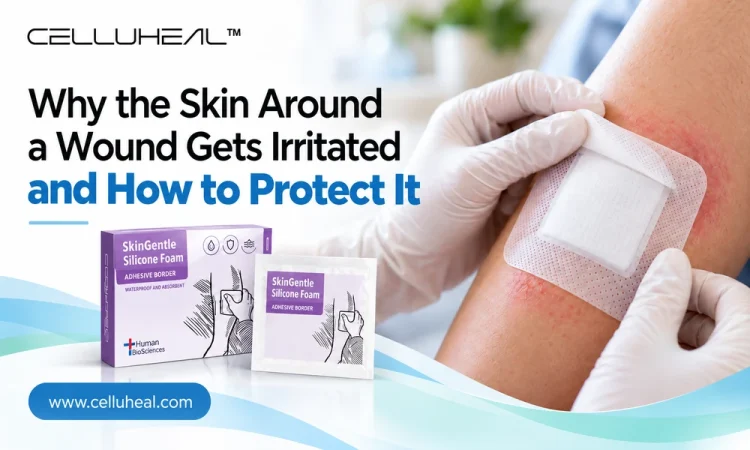
CelluHeal™ SkinGentle™ Silicone Foam is one example. It’s a five-layer foam dressing with a gentle silicone adhesive border, designed for wounds with moderate to heavy drainage.
The foam layers absorb wound fluid, and according to the product labeling, the silicone border is designed to reduce trauma to the surrounding skin and make dressing changes more comfortable. The directions say to place it so it covers at least 1 inch of skin around the wound, and to change it based on how much the wound drains. Whether it’s right for you depends on the wound and your skin, so follow the instructions and check with a healthcare professional if you’re not sure.
Taking a dressing off gently
Ripping a dressing off is quick, but it’s hard on your skin. Lift one corner first, hold the skin next to it with your other hand, and slowly peel the adhesive back low along the skin instead of pulling it straight up.
If a dressing is hard to get off, ask a healthcare professional whether a medical adhesive remover would help. And if the pad is stuck to the wound, never force it. Follow the removal instructions for that particular dressing.
When you put a new one on, don’t stretch the adhesive tight across the skin. Pick a size that stays in place without pulling on the area around it.
Moisture and fit
If a dressing keeps leaking or getting soaked through, it may not be able to handle the amount of fluid the wound produces. Check whether fluid has reached the adhesive edges or the skin beyond them, and replace a dressing that’s soaked, loose or dirty, following its instructions.
Where the wound is matters as well. Dressings near joints move more, and clothing rubs against dressings on the arms and legs.
If a dressing keeps coming loose or causing discomfort, ask a healthcare professional about a different size, shape or material. If your wound is being treated under medical supervision, don’t switch dressings without talking to your care provider first.
When redness is more than irritation
Mild irritation from adhesive may settle once the irritating material is gone and the skin is looked after. But a wound with increasing redness, warmth, swelling, worsening pain or unusual drainage needs medical attention.
A rash or blisters around the adhesive area that won’t go away can also be a skin reaction that needs checking. And if you have diabetes, poor circulation or very fragile skin, get professional advice on wound care even when the injury looks small.
If the irritation isn’t improving, don’t keep cycling through different creams, adhesives and wound products. Get it looked at instead.
Look after the whole area
Wound care shouldn’t leave healthy skin sorer after every dressing change. The right dressing, careful removal and keeping moisture off the surrounding skin go a long way toward preventing that.
Watch how your skin responds. If a dressing keeps causing discomfort or the wound changes, a healthcare professional can help you find something better suited to you.