

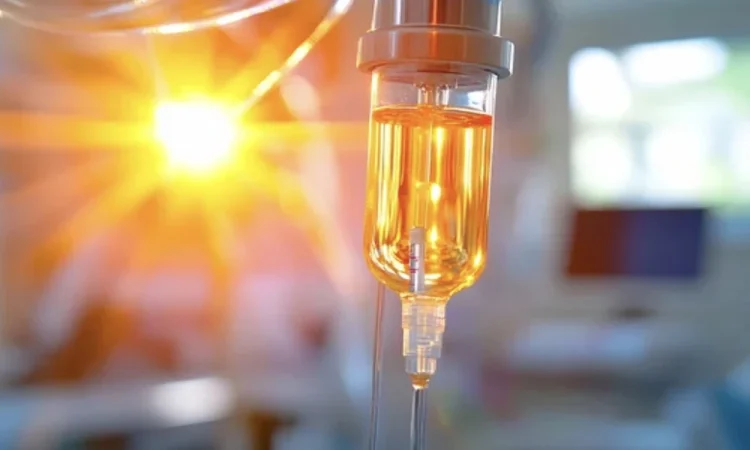
Walk into almost any wellness studio, recovery lounge, or med spa today and you’ll likely see a menu of intravenous drips promising everything from sharper focus to faster hangover recovery. The format is familiar: a clear bag hanging from a pole, a thin line running into someone’s arm, and twenty or thirty quiet minutes in a reclining chair. What’s less familiar to most people is what’s actually flowing through that line – and why delivering it through a vein, rather than swallowing a capsule, changes the equation at all.
This piece breaks down the real ingredients inside a typical IV drip, the science behind how the body uses them, and the honest limits of what these infusions can and can’t do.
The Foundation: It Starts With Fluid
Before any vitamin enters the picture, every IV drip begins with a base fluid. In the overwhelming majority of cases, that base is a sterile, isotonic solution – most commonly normal saline (a 0.9% sodium chloride solution) or lactated Ringer’s solution, which adds small amounts of potassium, calcium, and a buffering agent.
“Isotonic” simply means the fluid has roughly the same salt concentration as your blood, so it integrates smoothly without pulling water into or out of your cells. This base does the heavy lifting on hydration, and it’s the part of an IV drip with the clearest, most measurable effect. If you’re dehydrated after a stomach bug, a long flight, intense exercise, or a rough night, restoring fluid volume and electrolytes directly into the bloodstream works faster than sipping water, because it skips the gut entirely.
Those electrolytes matter on their own. Sodium, potassium, magnesium, and calcium regulate nerve signaling, muscle contraction, and fluid balance throughout the body. When people describe feeling “reset” after a drip, a meaningful share of that sensation is simple, efficient rehydration rather than anything exotic in the mix.
The Vitamins You’ll Usually Find
On top of the fluid foundation, most wellness infusions add a blend of water-soluble vitamins. The usual suspects:
- B-complex vitamins – thiamine (B1), riboflavin (B2), niacin (B3), pantothenic acid (B5), pyridoxine (B6), and cobalamin (B12). These play central roles in converting food into usable energy and supporting nerve and red blood cell function.
- Vitamin C (ascorbic acid) – an antioxidant involved in immune function, collagen synthesis, and tissue repair.
The most recognizable formula in this space is the Myers’ cocktail, named after the late Baltimore physician Dr. John Myers, who pioneered intravenous nutrient therapy in the 1960s and ’70s. As described by the Merck Manual, the classic blend combines magnesium, calcium, several B vitamins, and vitamin C in a sterile solution. Decades later, it remains the template most clinics build from.
You’ll also encounter a few common add-ons. Glutathione, an antioxidant the body produces naturally, is frequently offered for skin and detoxification claims. Zinc shows up in immune-focused blends. Some menus include amino acids, and certain medical settings add anti-nausea or anti-inflammatory medications. In hospitals, a related preparation nicknamed the “banana bag” – thiamine, folic acid, magnesium, and a multivitamin, tinted yellow – has long been used to treat nutritional gaps in patients recovering from heavy alcohol use. That clinical lineage is worth remembering: IV nutrients are a genuine medical tool, not only a wellness trend.
Why the Delivery Method Changes Things
The central argument for IV nutrients comes down to one word: bioavailability – how much of a substance actually reaches your bloodstream and tissues.
When you swallow a vitamin, it has to survive stomach acid and digestive enzymes, then cross the intestinal wall before entering circulation. For some nutrients, that process is efficient. For others, the gut caps how much can be absorbed at once, so a large oral dose mostly passes through. An intravenous line bypasses digestion completely, placing nutrients directly into the blood at concentrations that oral supplements simply can’t reach.
That’s a real pharmacological difference – but it comes with an important caveat. Most of the vitamins in these drips are water-soluble, which means the body doesn’t store the surplus. Once your tissues take what they need, the kidneys filter out the rest, and it leaves in your urine. In practical terms, flooding the bloodstream with far more vitamin C or B-complex than the body can use doesn’t bank it for later; much of the excess is simply excreted. Bioavailability gets you a higher peak, not unlimited benefit.
What the Evidence Actually Says
Here’s where an honest article has to slow down. For a person with a diagnosed deficiency, a malabsorption condition such as Crohn’s or celiac disease, or clinical dehydration, intravenous vitamins and fluids are well-established and sometimes essential. The science there is solid.
For a generally healthy, well-nourished person seeking an energy or immunity boost, the evidence is far thinner. Reviewing the research, Mayo Clinic specialists note that there’s limited proof IV vitamins offer added benefit to people whose nutritional levels are already normal – and that for most, the result is probably no better than a quality multivitamin paired with a good diet. A frequently cited 2009 pilot study tested the Myers’ cocktail against a placebo in adults with fibromyalgia; participants improved, but so did the placebo group, leaving the formula’s specific effect unclear given the small sample.
It’s also worth knowing that these infusions aren’t approved by the FDA to treat specific diseases, and regulators have pushed back on overreach. In 2018, the Federal Trade Commission charged a company with making deceptive, unsupported claims that its IV drips could treat conditions including cancer and multiple sclerosis. The takeaway isn’t that IV therapy is useless – it’s that the measurable wins (hydration, correcting a true deficiency) are more grounded than the broad “cure-all” marketing that sometimes surrounds it.
Safety, Supervision, and Choosing Well
Because an IV places substances directly into your bloodstream, the margin for error is different than with a pill. High doses carry real considerations: excess vitamin B6 over time has been linked to nerve damage, large IV doses of thiamine can trigger severe allergic reactions in rare cases, and minerals like magnesium and calcium can interact with blood-pressure medications and certain antibiotics. People with kidney disease or heart failure need medical clearance, since added fluid volume isn’t trivial for them.
This is why supervision is the part of the conversation that matters most. A reputable provider screens your history, has a licensed clinician – typically a registered nurse or a provider under medical oversight – place the line, and maintains strict sterile technique, since improperly handled equipment carries infection risk. Wellness-focused clinics such as Heights IV operate in this clinical register rather than treating infusions as a casual retail product, and a transparent operation will happily walk you through exactly what’s in each formula before you commit.
If you’re considering it, the most useful first step is to look closely at a clinic’s available infusion options and ingredient breakdowns, then talk with your own physician about anything you take regularly. Match the drip to a real reason – recovering from illness, addressing a confirmed deficiency, rehydrating after genuine fluid loss – rather than to a vague promise.
The Bottom Line
An IV drip is, at its core, a sterile fluid base carrying a measured blend of electrolytes, B vitamins, and vitamin C, sometimes joined by antioxidants like glutathione or condition-specific additions. The intravenous route genuinely does deliver these nutrients more directly than the digestive tract, and for hydration and true deficiencies, that direct line is a legitimate advantage.
What it isn’t is a shortcut around the fundamentals. Sleep, nutrition, movement, and managing stress still do the heavy lifting for long-term health. Understood that way – as a targeted tool with specific, evidence-backed uses rather than a universal fix – an IV drip becomes a lot easier to evaluate honestly, and a lot more useful when it’s the right call.