

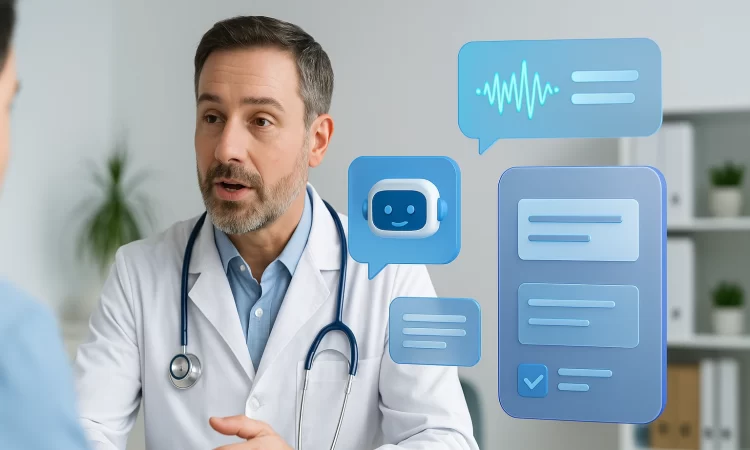
Clinical documentation has long been one of the most demanding aspects of modern healthcare. Physicians and healthcare providers are expected to deliver high-quality care while simultaneously producing detailed, accurate medical records. This ongoing tension has accelerated the adoption of AI medical scribe solutions, which are redefining how medical documentation is created, reviewed, and stored.
Rather than treating documentation as a separate task, medical scribe AI integrates directly into the clinical encounter. The result is a more natural workflow where conversations with patients are transformed into structured notes without disrupting care delivery.
Why Documentation Needs a Smarter Approach
Traditional documentation methods often rely on manual typing or delayed dictation. Both approaches are time-consuming and prone to fatigue-related errors. Even experienced clinicians can struggle to keep up with documentation demands, particularly in high-volume practices.
An AI medical scribe addresses this challenge by working quietly in the background. It listens, understands clinical context, and produces usable medical notes automatically. This shift allows clinicians to complete documentation during or immediately after visits, instead of staying late to finish charts.
How Medical Scribe AI Works in Practice
At the core of medical scribe AI is advanced speech recognition combined with medical language understanding. During a patient encounter, the system captures spoken dialogue and identifies clinically relevant details such as symptoms, diagnoses, medications, and treatment plans.
Unlike basic dictation tools, AI medical scribing does not simply record everything word for word. It organizes information into standardized formats, removes irrelevant conversation, and adapts output to match clinical documentation standards. The end result is a clear, structured note that aligns with professional and regulatory expectations.
From AI Medical Transcription to Intelligent Scribing
AI medical transcription plays an important supporting role in this process. It converts speech into text with high accuracy, even in noisy clinical environments or when multiple speakers are involved. However, transcription alone still requires significant editing.
This is where intelligent scribing makes the difference. AI medical scribing builds on transcription by interpreting meaning, prioritizing relevant content, and shaping notes in a way that mirrors how clinicians naturally think and document. This reduces review time and improves consistency across patient records.
The Role of Medical Transcription Software
Modern medical transcription software has evolved beyond simple speech-to-text tools. When combined with AI-driven scribing capabilities, it becomes a powerful documentation engine that supports clinicians rather than slowing them down.
High-quality transcription software is designed to recognize medical terminology, abbreviations, and specialty-specific language. This ensures that notes are not only fast to generate but also accurate and clinically meaningful. Integration with electronic health record systems further streamlines the process, eliminating duplicate data entry.
Benefits Beyond Time Savings
While efficiency is a major advantage, the value of AI medical scribe solutions extends further. Reduced documentation burden helps lower clinician burnout, a growing concern across healthcare systems worldwide. When providers spend less time on administrative work, they are more engaged, focused, and satisfied in their roles.
Patient experience also improves. Without the distraction of constant typing, clinicians can maintain better communication and build stronger relationships. This leads to clearer explanations, better adherence to treatment plans, and higher overall satisfaction.
Adaptable Across Care Settings
One of the strengths of medical scribe AI is its flexibility. It can be used in outpatient clinics, hospitals, emergency departments, and telehealth environments. Different specialties benefit from customized note structures that reflect their workflows, terminology, and documentation requirements.
As remote care continues to expand, AI medical transcription and scribing tools ensure that virtual visits are documented with the same level of detail and accuracy as in-person appointments.
Looking Ahead
The future of clinical documentation is moving toward automation that feels natural and supportive. AI medical scribing is not about replacing clinicians or removing human judgment. Instead, it acts as a reliable assistant that handles repetitive tasks, allowing medical professionals to focus on what matters most.
As medical transcription software and artificial intelligence continue to advance, AI-powered scribes will become an essential part of everyday clinical practice. For healthcare organizations seeking efficiency, accuracy, and better clinician well-being, AI medical scribe technology represents a meaningful step forward.