
CBD oil comes in several different forms. The labels may say full-spectrum, broad-spectrum, CBD isolate, or THC-free. These terms can be confusing if you are shopping for CBD for the first time.
Full-spectrum CBD oil contains more of the naturally occurring compounds found in hemp. That does not automatically make it the right choice for everyone. Understanding the label, potency, hemp source, and product testing can help you choose a CBD oil with confidence.
What Is Full-Spectrum CBD Oil?
Full-spectrum CBD oil is made with an extract containing CBD and other compounds naturally found in hemp. These may include minor cannabinoids, terpenes, flavonoids, and a small amount of THC.
Under federal law, hemp is defined as cannabis containing no more than 0.3% delta-9 THC by dry weight. Full-spectrum CBD oil can contain THC as long as the product stays within the applicable legal limit.
The small amount of THC in a compliant full-spectrum product is not expected to produce the same experience as marijuana. However, people can respond differently based on their sensitivity, serving size, and the product.
Anyone who wants to avoid THC completely should consider a broad-spectrum or CBD-isolate product instead.
Full-Spectrum vs. Broad-Spectrum CBD
Broad-spectrum CBD contains CBD and several other hemp compounds, but the THC is removed during production.
This gives consumers a way to use a wider range of hemp compounds while limiting their exposure to THC. However, very small or undetectable traces of THC could remain, depending on the product and testing method.
The main difference is simple. Full-spectrum CBD may contain a legal amount of THC, while broad-spectrum CBD is processed to remove it.
People who are sensitive to THC or concerned about workplace drug testing may prefer broad-spectrum CBD. No CBD company can guarantee that someone will pass every drug test, so this possibility should be considered before using any hemp-derived product.
What Does THC-Free Mean?
A THC-free CBD oil usually contains broad-spectrum hemp extract or CBD isolate.
CBD isolate is a highly refined form of CBD. Most of the other hemp compounds have been removed. A product made with isolate provides CBD without the wider range of cannabinoids and terpenes found in full-spectrum oil.
Do not rely only on the words “THC-free” on the front of the bottle. Check the product’s laboratory report to see whether THC was detected and what testing method was used.
Do You Feel Anything From Full-Spectrum CBD?
Full-spectrum CBD oil should not produce the strong high associated with marijuana when it is used according to the directions. It may contain a small amount of THC, but the amount is limited in products that meet the federal definition of hemp.
Some people report noticing subtle changes in how they feel, while others do not notice anything obvious. A person’s experience can depend on the amount used, individual sensitivity, body size, other medications, and previous CBD use.
CBD should not be expected to create an immediate or dramatic feeling. Personal experiences also do not prove that a product will have the same effect on everyone.
Avoid driving or operating equipment until you know how a particular CBD oil affects you.
How Long Does Full-Spectrum CBD Oil Take to Kick In?
There is no exact amount of time that applies to everyone. How the oil is used can make a difference.
CBD oil held under the tongue may be absorbed differently than CBD that is swallowed immediately. When CBD is swallowed, it must move through the digestive system. This can make the experience take longer.
Food, serving size, metabolism, and the product formula may also affect the timing. Some people may notice something within an hour, while others may take longer or notice very little.
Follow the directions on the product label. Do not take additional servings too quickly simply because you do not notice an immediate effect.
Is Full-Spectrum CBD Stronger?
Full-spectrum CBD is not automatically stronger than broad-spectrum or THC-free CBD. Strength is usually based on the amount of CBD in each serving.
For example, a full-spectrum oil providing 10 milligrams of CBD per serving contains less CBD than a broad-spectrum product providing 25 milligrams. The type of extract and the amount of CBD are two separate details.
Some consumers prefer full-spectrum CBD because it contains a wider range of hemp compounds. This is sometimes connected to a theory called the “entourage effect,” which suggests that hemp compounds may work together. Research is continuing, and this should not be treated as proof that every full-spectrum product will work better.
Compare the milligrams of CBD per serving instead of judging strength only by the words “full-spectrum.”
How to Read CBD Potency
CBD oil bottles commonly list the total amount of CBD in the entire bottle. This is not necessarily the amount in one serving.
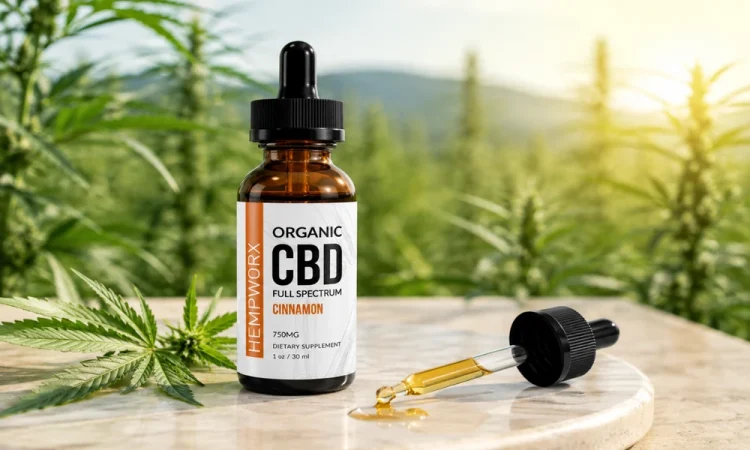
A 30-milliliter bottle containing 1,500 milligrams of CBD will be more concentrated than a bottle of the same size containing 750 milligrams. The label should explain the serving size and the amount of CBD provided in that serving.
Also check the amount of THC. A trustworthy full-spectrum CBD label should clearly identify the type of extract and direct consumers to current testing information.
HempWorx offers full-spectrum and THC-free CBD options in different concentrations. When comparing HempWorx CBD oils, review the current label to confirm the bottle size, CBD concentration, suggested serving, ingredients, and type of hemp extract.
Why Hemp Sourcing Matters
The quality of CBD oil begins with the hemp. Hemp can absorb substances from the soil in which it grows. This makes responsible farming and product testing especially important.
Look for information about where the hemp was grown and how the company selects its suppliers. Companies should be willing to explain their manufacturing and quality standards.
The extraction process also matters. CBD must be separated from the plant and added to a carrier oil, such as coconut-derived MCT oil or hemp seed oil. The ingredient list should identify the carrier oil and any added flavors.
Check the Third-Party Test Results
Before buying full-spectrum CBD oil, look for a Certificate of Analysis, also called a COA. This is a report from a laboratory that tests the product.
The report should confirm the amounts of CBD and THC. It may also show testing for heavy metals, pesticides, solvents, microbes, and other unwanted materials.
Check that the batch number on the report matches the bottle and that the testing date is current. Product testing helps confirm that the contents are consistent with the label.
CBD Safety and Medication Interactions
CBD can cause side effects, including tiredness, diarrhea, appetite changes, and stomach discomfort. It can also change how certain medications work.
TheFDA warns that CBD may interact with medications and has the potential to cause liver injury. Talk with a doctor or pharmacist before using CBD if you take prescription medicine, over-the-counter medicine, or other supplements.
The FDA advises against using CBD during pregnancy or while breastfeeding. Keep CBD oil away from children and pets.
Choosing a Full-Spectrum CBD Oil
Begin by checking the CBD concentration, serving size, THC content, ingredients, hemp source, and laboratory testing. Decide whether you are comfortable using a product that contains a small amount of THC.
If you want to compare available options, review the current HempWorx Full-Spectrum CBD Oil products and choose a concentration that fits your preferences. Start with the product directions and speak with a healthcare professional if you have questions about CBD or medications.
This article is for educational purposes and is not medical advice. CBD products are not intended to diagnose, treat, cure, or prevent disease.